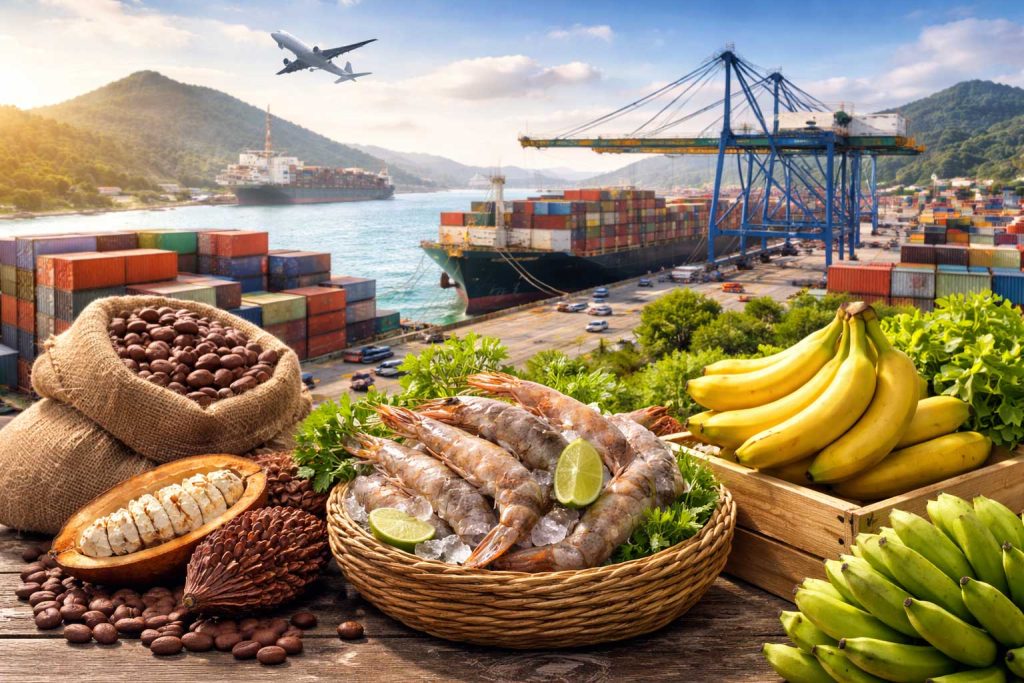
Non-oil exports have become one of the most important pillars of the Ecuadorian economy. Products such as cacao, shrimp, and bananas lead shipments to international markets, strengthening foreign trade and boosting national and international logistics.
Ecuador is recognized worldwide for its fine aroma cacao, prized in Europe, the United States, and Asia for its quality and aromatic profile. This product requires specialized logistics to guarantee adequate storage conditions, humidity control, and traceability from the producer to the port of destination.
Ecuadorian shrimp, for its part, is one of the country’s main export products. The cold chain is essential to maintain quality and comply with international health standards. Logistics in this sector integrates refrigeration processes, customs control, and efficient maritime coordination to ensure timely deliveries.
Bananas, a traditional emblem of Ecuadorian exports, also depend on a robust logistics infrastructure. From the plantations to the ports, logistics transport must adhere to strict shipping schedules and phytosanitary protocols to preserve product freshness.
Port efficiency, maritime connectivity, and technological modernization are key factors for sustaining the growth of these exports. Furthermore, market diversification demands increasingly agile and competitive logistics transport solutions.
In a global context where traceability and sustainability are priorities, Ecuador continues to strengthen its infrastructure and processes to consolidate its position as a regional leader in non-oil exports. The development of logistics transport will be crucial for maintaining the competitiveness of cacao, shrimp, and bananas in international markets.